Table linens · Style and care
The Appeal of Libeco Linen: Choosing and Caring for Tablecloths
A linen tablecloth can make an ordinary dinner feel a little more considered—and a celebration feel effortlessly welcoming. With its natural texture, graceful drape, and relaxed character, Libeco linen brings a quiet kind of polish to the table. Here’s how to choose a style that suits your home and care for it so it can be enjoyed for years.
Why linen feels right at the table
Some table settings announce themselves with shine and symmetry. Linen takes another route. Its appeal is tactile: a softly irregular surface, a substantial hand, and folds that fall with a natural ease. Rather than looking pristine in a way that feels untouchable, it suggests a table that is ready to be used—whether the occasion is a quick weekday meal, a long Sunday lunch, or a holiday gathering that keeps everyone talking well after dessert.
That character comes from the flax fiber used to make linen. Compared with a perfectly smooth, uniform cloth, linen has visible texture and a relaxed appearance. The fabric can feel crisp when new, then soften with use and laundering. Small creases are part of its visual language, not automatically a sign that the cloth has been neglected. For many people, that lived-in quality is precisely the point: linen looks thoughtful without insisting on formality.
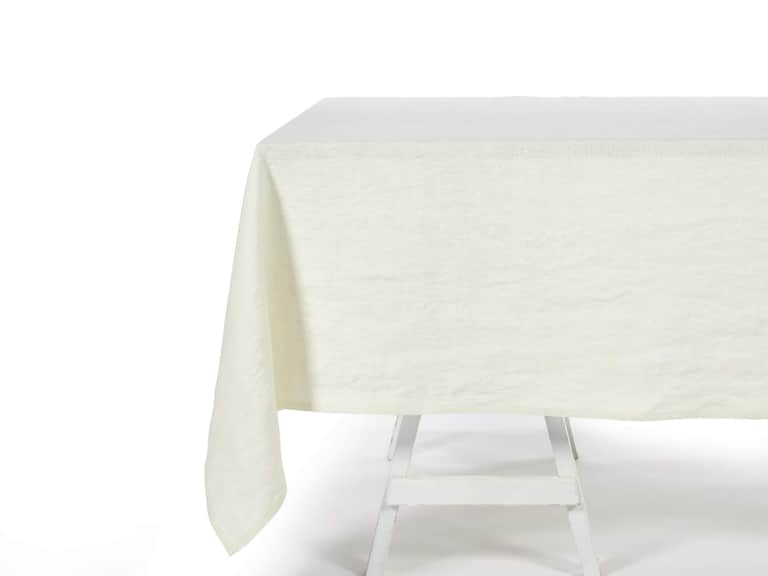
Libeco’s Hudson Tablecloth offers a clear example of the look. It is made from 100% linen with a stonewashed finish, woven in Belgium from European flax yarn, and carries the Belgian Linen label. Its stated fabric weight is 12.2 oz/yd², or 410 g/m²—a substantial specification that can help shoppers understand the cloth’s character. The finish gives the fabric a softer, more relaxed impression than a sharply pressed, newly crisp linen might have.
That combination makes linen a useful choice for people who want one tablecloth to move between everyday meals and special occasions. Add simple plates and glasses, and the fabric can feel easygoing. Bring in candles, polished cutlery, and a carefully chosen centerpiece, and the same cloth can become the grounding layer for a more dressed-up table.
Start with the way you use your table
Before settling on a color or finish, consider the tablecloth’s real job. A dining table used daily by a busy household faces different demands from a table reserved for occasional entertaining. How often will the cloth be washed? Will it be used for meals with children, crafts, or casual hosting? Is it meant to stay on the table between meals, or come out only when guests arrive? Honest answers help guide a choice that feels beautiful in practice, not just on a product page.
For everyday use, prioritize a fabric and color you are comfortable living with. A linen cloth does not need to remain perfectly smooth to look attractive, but it should suit your tolerance for wrinkles, spills, and regular laundering. If you like a relaxed room, natural creasing may feel charming. If you prefer a more formal, pressed appearance, be prepared to spend extra time on ironing or steaming after washing.
For a gathering, think about the mood you want to create. Linen’s texture can make a formal arrangement feel less stiff, while a carefully pressed cloth and coordinated napkins can give the table a more traditional finish. Either way, the fabric’s softness provides a gentle counterpoint to hard surfaces such as ceramic plates, glassware, and metal flatware.
Care routines matter, too. A cloth that fits your household’s washing habits is more likely to be used often. Check the care instructions supplied with the specific tablecloth before washing; instructions can vary by maker and product. If you would rather avoid a high-maintenance routine, a finish and color that look appealing with natural creasing may be a better match than a cloth you expect to keep sharply pressed after every use.
Color, texture, and the feeling of a room
Color can change a table’s entire mood, even when everything else stays the same. Pale neutrals tend to create a light, calm foundation and work easily with a broad range of tableware. Deeper or warmer shades can feel more intimate and can bring out the grain of wood furniture. A color with visible depth may also make the linen texture especially noticeable, while a very light shade puts the focus on the cloth’s folds and the objects placed on it.
Libeco’s Hudson Tablecloth is described as an adaptable linen piece, and its stonewashed finish gives it a natural, softened look. When choosing a shade, consider the room as a whole: the table material, wall color, lighting, and the dishes you already own. If your plates are patterned, a quieter cloth can let them shine. If your everyday tableware is simple, the linen itself can supply the visual interest.
It can help to think in layers rather than searching for a perfectly matched set. Linen pairs comfortably with smooth ceramic, clear glass, rustic wood, and sleek metal. Repeating one color in a small detail—such as a napkin, serving bowl, or flower—can make a setting feel cohesive without making every piece identical. For a more relaxed look, allow textures to complement rather than compete: woven linen, plain plates, and a modest centerpiece are often enough.
Texture also provides a useful bridge between casual and polished. A stonewashed cloth may feel at home in an informal kitchen, yet it can still look refined with carefully chosen tableware. That flexibility is part of linen’s enduring appeal: the fabric can adapt to the occasion instead of dictating it.
Get the drape and dimensions right
A beautiful fabric can look awkward if the tablecloth is the wrong size. Start by measuring the tabletop’s length and width, or its diameter if the table is round. Then decide how far you want the cloth to hang over the edges. This overhang is often called the drop. A shorter drop can feel practical for everyday dining, while a longer one can lend a more formal, generous look. The best choice depends on the table, the chairs, and how the cloth will be used.
For a rectangular table, add the intended drop twice to both the measured length and width. For example, if you want a drop of 10 inches on each side, add 20 inches to both measurements. For a round table, add twice the desired drop to the diameter. These calculations are a starting point; the shape and height of the table, as well as the way the cloth hangs, can affect the final impression.
Take a moment to think about chair clearance and everyday comfort. A very long cloth may brush against seated guests or fall into laps, while a shorter one can be easier to manage at a busy family table. If the table has a distinctive shape, measure it carefully and check the product’s listed dimensions before ordering. Do not assume that a standard size will suit every table.
Linen’s drape is part of its visual charm. Its weight and natural texture help it fall into soft folds rather than appearing like a rigid sheet. Still, a well-chosen size is what lets those folds look intentional. When in doubt, measure twice—and keep the tape measure nearby when comparing your table’s dimensions with a product listing.
An everyday cloth that can dress up for company
One of linen’s most appealing qualities is that it does not require a special occasion. A tablecloth can make a regular meal feel cared for, even if dinner is simple. Add a bowl of fruit or a vase of seasonal stems, and the setting feels complete without being overworked. For a busy household, that ease matters: the table can look welcoming without demanding a complicated arrangement.
When guests are coming, linen gives you room to add more ceremony. Press the cloth if you prefer a crisp surface, then layer on napkins, candles, and serving pieces. Or leave the fabric with its natural creases and let the styling remain relaxed. The contrast between a softly textured cloth and more polished tableware can be especially appealing because it keeps the setting from feeling too formal.
The Hudson Tablecloth’s 100% linen construction and stonewashed finish make it a versatile option to consider for both uses. Its Belgian weaving and European flax yarn are specified features, while its substantial weight gives useful context for how the cloth may feel and hang. Details like these help shoppers assess whether a piece suits their home, rather than choosing on appearance alone.
Explore the Libeco Hudson Tablecloth if you are looking for a linen option with a softened finish and a versatile place in the dining room. Check its available size and color information against your own table before deciding; the right fit is as important as the fabric itself.
Linen care: small habits, lasting character
Linen is made to be used, but a thoughtful routine can help it keep its feel and appearance. Begin with the manufacturer’s care instructions for the particular tablecloth. They take precedence over general advice because washing recommendations can depend on the fabric, finish, and construction. If the instructions are not immediately available, check the product details or ask the retailer before treating the cloth.
In general, avoid treating linen as if it needs aggressive cleaning every time it is used. Shake out crumbs, deal with spills promptly, and wash when the cloth is ready for it. For a spot or spill, gently blot rather than rubbing, which can push the mark deeper into the fibers or roughen the surface. Avoid making assumptions about stain removers or bleaching agents; test only when the care guidance permits, and follow product directions carefully.
When washing, use the temperature and cycle recommended for the cloth. A gentle approach is often a sensible way to reduce unnecessary wear, but the product’s own label should guide the choice. Avoid overloading the machine so the fabric has room to move. If washing with other items, choose compatible colors and fabrics to limit the chance of transfer or abrasion.
Drying is another moment to make a difference. Follow the stated instructions rather than relying on a universal rule. If the cloth can be air-dried, laying it flat or hanging it neatly may help it dry with fewer harsh creases. If machine drying is allowed, use the recommended setting and remove the linen promptly. Avoid excessive heat unless the care instructions specifically allow it.
For a smoother finish, press or steam the tablecloth according to the maker’s guidance. Some people prefer linen’s natural wrinkles; others like a more polished surface for entertaining. Both approaches suit the fabric. If ironing, working while the cloth is slightly damp may make creases easier to release, but check the care instructions and use an appropriate setting for the material. A steamer can be a convenient alternative when a full ironing setup feels like too much effort.
Storing linen between meals and seasons
Once the cloth is clean and completely dry, store it in a cool, dry place. Moisture left in folded fabric can lead to an unpleasant odor or other damage, so allow it to dry fully before putting it away. A breathable storage space is preferable to sealing linen away while it is damp. Keep it away from direct sunlight for long periods, which can affect color over time.
Fold the tablecloth loosely and avoid creating an unnecessarily tight, sharp crease in the same place every time. If storage space allows, rolling it around a clean, smooth tube can reduce fold lines. For a cloth used regularly, a simple shelf or drawer makes it easy to reach—and increases the odds that it will be used rather than saved for a perfect occasion.
It is tempting to reserve a beautiful tablecloth for a future celebration. But linen’s appeal often grows through use, and its softening with time is part of the experience. Use it for a quiet breakfast or an ordinary dinner, not only for a holiday meal. A favorite cloth earns its place in the home by becoming part of the routine.
Common tablecloth questions, answered
Should a linen tablecloth be perfectly smooth?
No. Linen naturally creases, and many people value that relaxed texture. Pressing can create a more formal finish, but it is a style choice rather than a requirement. The best look is the one that suits your home and the occasion.
Can one linen tablecloth work for everyday dining and entertaining?
Yes, provided its size, color, and care requirements suit your habits. A versatile shade and a finish you enjoy without constant pressing can move easily from casual meals to a dressed-up table. Always check the product’s dimensions and care instructions before purchase.
How do I choose the right tablecloth size?
Measure the tabletop, then decide on a comfortable drop around the edges. Add twice that drop to the table’s length and width—or to the diameter for a round table. Compare your calculation with the dimensions listed for the cloth and consider chair clearance.
Does linen become softer over time?
Linen often softens with use and laundering, though the exact feel depends on the fabric and finish. Follow the care directions to help preserve the cloth while allowing it to develop the character that makes linen so appealing.
A little texture goes a long way
The best tablecloth is not necessarily the one saved for a flawless dinner party. It is the one that makes the table feel more inviting and fits naturally into the way you live. Libeco linen brings a useful balance: enough texture to feel distinctive, enough versatility to work across different occasions, and a character that can become more personal with use.
Choose with your table’s dimensions, room palette, and washing routine in mind. Then let the cloth do what it does best: soften the setting, make everyday meals feel considered, and give special gatherings a relaxed kind of elegance. With careful washing, sensible drying, and dry, breathable storage, linen can remain part of the table for many meals to come.